
Shared AI memory is a project-owned knowledge layer that multiple AI tools can search when they need context. Instead of teaching every new chat about the project, you save the research once, organize it around the work, and let compatible clients retrieve the relevant sources when a question is asked.
That distinction matters. Chat history belongs to a conversation. Shared project memory belongs to the project. The project can outlive a chat, a model, and even the AI application you use today.
Why context gets lost between AI tools
ChatGPT, Claude, Codex, and Cursor each maintain their own conversations and product-specific state. A useful discussion in one tool does not automatically become reliable context in another. When you switch tools, you usually compensate by pasting a brief, uploading the same files, or summarizing what happened elsewhere.
That manual handoff creates three problems:
- The summary drops details that later become important.
- Different tools receive different versions of the project.
- Nobody can easily check which source supported a claim.
Long prompts can temporarily reduce the problem, but they do not create durable memory. They are copies. Every copy can drift away from the research it was meant to represent.
What shared project memory should contain
A useful memory layer is not a transcript of everything you have ever said to an assistant. It is a deliberate collection of material that future work should be able to reuse.
For a product launch, that collection might include customer interviews, competitor pages, positioning notes, technical decisions, launch examples, and the current plan. For a YouTube project, it might include videos, posts, articles, audience comments, examples, and strong passages from previous research.
Each saved item should keep four things together:
- The original source URL.
- The captured content or exact passage.
- The project it belongs to.
- Any note explaining why it matters.
This structure lets an AI retrieve evidence instead of relying on a flattened project summary.
How MCP makes the memory reusable
The Model Context Protocol architecture separates the AI host from servers that provide focused context and capabilities. A server can expose resources and retrieval tools, while the host decides when and how to use them.
In practical terms, an MCP knowledge server can make the same project available to several compatible AI clients. The client searches the project, opens a relevant saved source, and brings only the needed context into the current task.
This is better than loading the entire library into every prompt. Retrieval keeps the active context smaller and makes it possible to return to the exact source behind an answer.
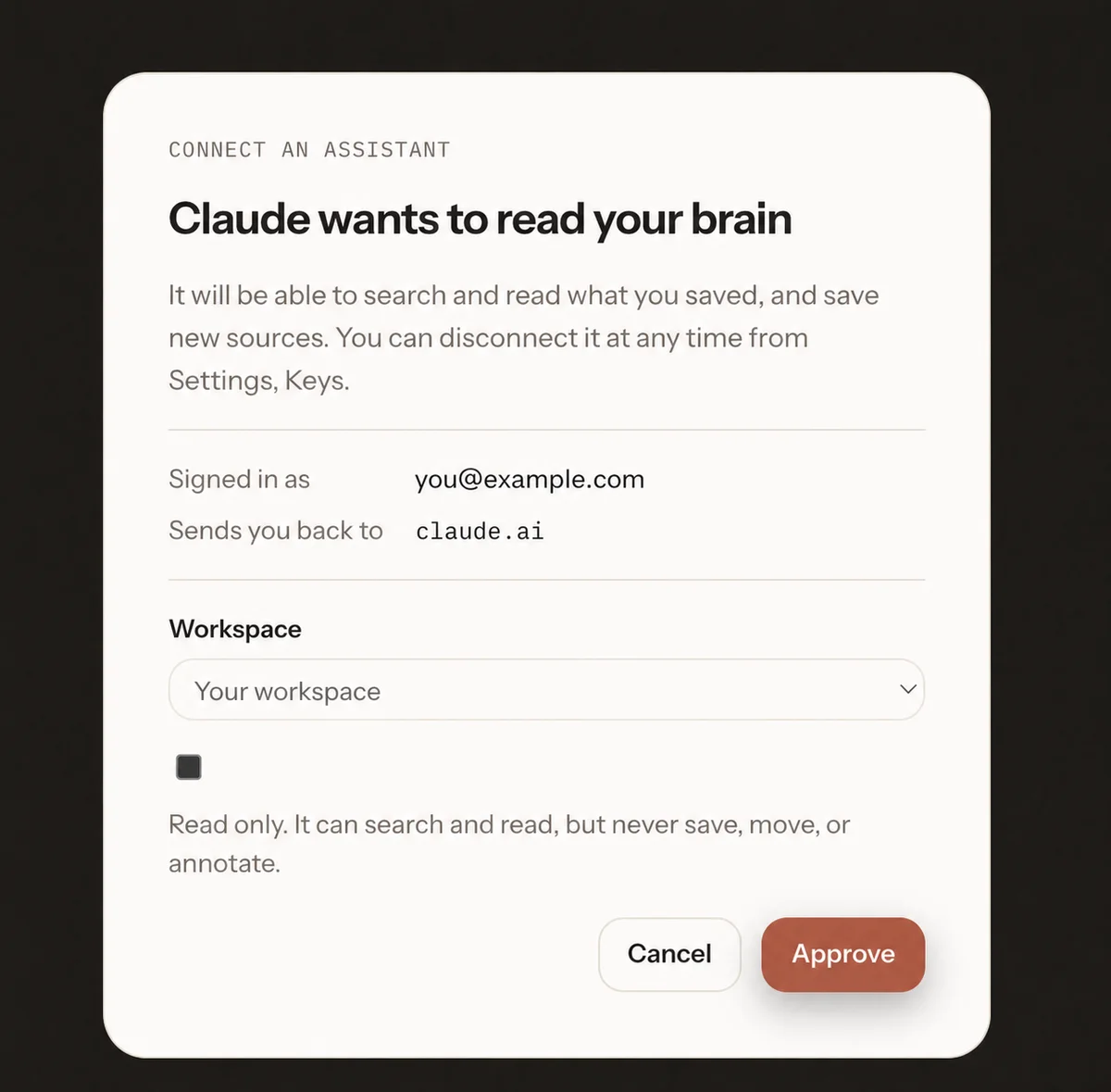
SauceTab provides a hosted remote MCP endpoint described in the SauceTab MCP guide. The research stays organized in SauceTab while compatible tools can search and read it with the permissions you approve.
A practical shared-memory workflow
Start with one real project rather than importing your entire digital life.
- Create a project with a clear outcome, such as a product launch or video series.
- Capture the articles, videos, posts, and passages that directly affect that outcome.
- Add short notes when a source has a specific role, such as evidence, objection, example, or decision.
- Connect the project to the AI tools you actually use.
- Ask the tool to search the project before making claims or proposing work.
- Open the cited passages when a decision depends on accuracy.
A useful prompt is: Search the project for evidence about this question. Separate what the sources say from your recommendation, and name any missing evidence.
That prompt gives retrieval a job. It also prevents the assistant from treating generic model knowledge as if it came from your project.
Shared memory is not automatic truth
A memory layer improves continuity, but it does not guarantee correctness. Old sources can become stale. A captured opinion can conflict with a newer customer interview. Retrieval can find a relevant passage that still does not answer the question.
Good project memory therefore needs visible provenance. You should be able to see which saved sources were used, inspect the exact passages, and update or remove material when the project changes.
The goal is not an AI that remembers everything. The goal is a project that keeps its important evidence available, regardless of which compatible AI tool is doing the next piece of work.